
Tonghand vs stationary breakout unit: looking beyond the obvious
About to invest in a stationary breakout unit? It may be worth taking a
step back first. On paper, the choice seems straightforward. A stationary breakout unit is a familiar solution. Fixed position, clear function, reliable
in making and breaking connections. But on site, the reality is often less
static. There is another way to do it…
It moves to where the work is
A stationary breakout unit defines a fixed point in the operation. The pipe needs to be brought to the unit, aligned and handled within that setup. It works, but it also dictates how the workflow is organised. In practice, that means tool joints need to stop at an exact position, often coordinated by radio. This takes time and interrupts the process.
A Tonghand turns that around. Work happens directly on the reamer, drill head or any downhole tool. There is no need to move the pipe to a fixed position or adapt the workflow to a static machine. Breaking or making can take place while the rig continues adding or removing pipe. That changes how the job runs. Less repositioning, less waiting, more control over the process.
More than making and breaking
The difference becomes even clearer when looking at how connections are prepared. With a stationary unit, connections are typically made when needed, often as part of the main drilling process. A Tonghand allows for a different approach.
Strings can be pre-made, torqued to the correct specifications and laid out in advance. When required, the full string can be picked up and run in one go. This reduces time pressure during critical phases and creates a more controlled workflow.
It also ensures that connections are made according to the specifications of the drill pipe supplier, which is essential for both safety and performance, and increasingly required from an insurance and compliance perspective.
Only correctly made connections allow full torque and pulling force to be applied. If connections are not made to specification, the risk of thread damage, excessive wear or even pipe failure increases. For example, incorrectly made connections can become so tight that they can only be loosened by heating the female thread, making the pipe unusable.
A drill string downhole can only be trusted when every connection is made up correctly.
Pipehandling anywhere on site
No two jobsites are the same. Space can be limited, conditions change and setups need to adapt. A fixed breakout unit does not move with those conditions. A Tonghand does.
Because the Tonghand is mounted on an excavator, often already present on site for digging or other work, it can be positioned anywhere the machine can reach. Across the jobsite, around obstacles and in confined spaces. Pipe can be handled under any angle and in any position, without changing the setup.
That flexibility becomes especially valuable when working around obstacles, on restricted sites or in non-standard setups.
Forward reaming: reduce transport and disposal
The impact becomes even clearer when forward reaming is applied. Instead of bringing cuttings and drilling fluid back and forth across the site, the process is centred around the rig. Drilling fluid remains at the rig side, where it can be controlled and managed directly.
This reduces the need for transport of spoil and slurry, which has a direct effect on logistics. Fewer truck movements, less handling on site and a more predictable flow of material. It also reduces the need for additional equipment and manpower, such as return lines, pumps or vacuum trucks, and the space required to operate them.
The result is a more efficient process with a clear impact on overall project cost. In practice, this can lead to substantial savings on a single bore. For a practical example, see how this approach was applied on site by Klever, where savings of up to €20,000 were achieved on a single bore.
Safety: reducing risk at the source
Static breakout units and the Tonghand were developed for the same reason: to make pipe handling safer.A static breakout unit already marks a major step forward compared to manual handling. It brings control to the process and reduces the need for people to physically work the pipe by hand.
The Tonghand builds on that same principle but takes it a step further. Because it can work directly on downhole tools, pipe handling becomes more flexible and requires even less manual intervention around the operation. That reduces exposure, limits unnecessary handling and gives the crew more control over the operation.
It is not a question of one safe system versus an unsafe one, but about how much risk can still be taken out of the job.
Comparable investment, lower operating cost
One of the common assumptions is that a Tonghand represents a significantly higher investment than a static breakout unit. In practice, that difference is often limited.
The real difference lies in how the equipment is used and what it enables on site – less movement, shorter cycle times, lower operational cost per metre. And that impact is measurable.
Want to find out for yourself? Check out this tool to calculate what the Tonghand means for your operation.
Already working with a stationary breakout unit?
Safety can be taken a step further by combining it with a Deckhand.It allows drill pipe to be handled without lifting slings or manual positioning near the breaker.
You might like to read...

Supporting HDD in France: partnership with BCM-Ditch Witch
An interview with Laurence Maitre, Managing Director at BCM – Ditch Witch France about the French HDD market, challenges contractors face, and what this new partnership means in practice.

What to do with used drilling fluid? Transpose Recycling’s approach
Used drilling fluid is part of every HDD project. But what happens next?
Transpose Recycling is a new company fully focused on cleaning and reusing drilling fluid within the HDD sector. This article takes a closer look at their approach.

How to keep your HDD equipment in good condition during winter
Winter conditions can damage HDD equipment fast. Discover practical tips to prevent frost damage, protect components and avoid costly downtime.

Why would a vertical well operation use an HDD mixing unit?
This jobsite visit with WellGear shows exactly when HDD equipment becomes the smarter choice. From heavy pills and high-precision mixing to wells with no built-in hopper, the SiteTec M2000E proved its value in a geothermal plug-and-abandonment project.
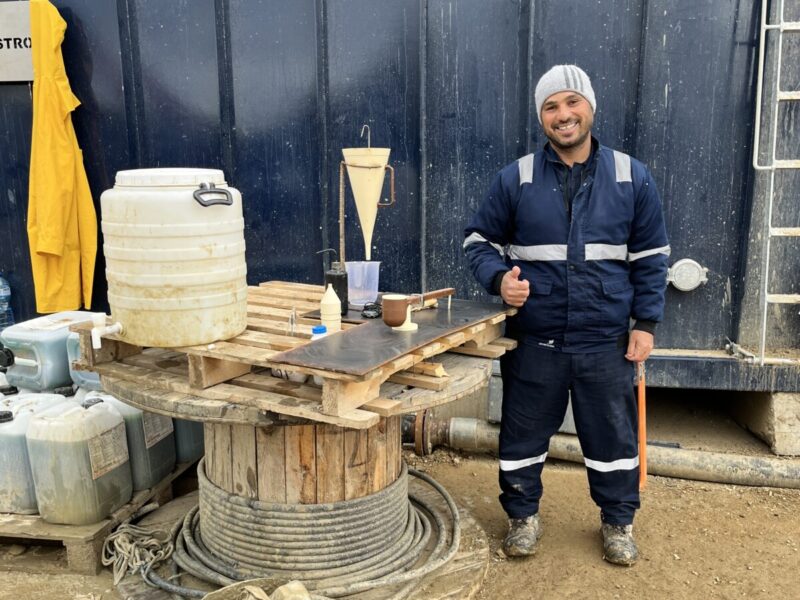
The rise of HDD in Bulgaria
How do you build reliable HDD capacity in a country where trenchless technology is still in its early stages? This article explores the rise of HDD in Bulgaria through real field experience: from Actus’ role as a dealer, to the challenges of outdated infrastructure, to the teamwork behind a 300-ton rig on the Vertical Gas Corridor.
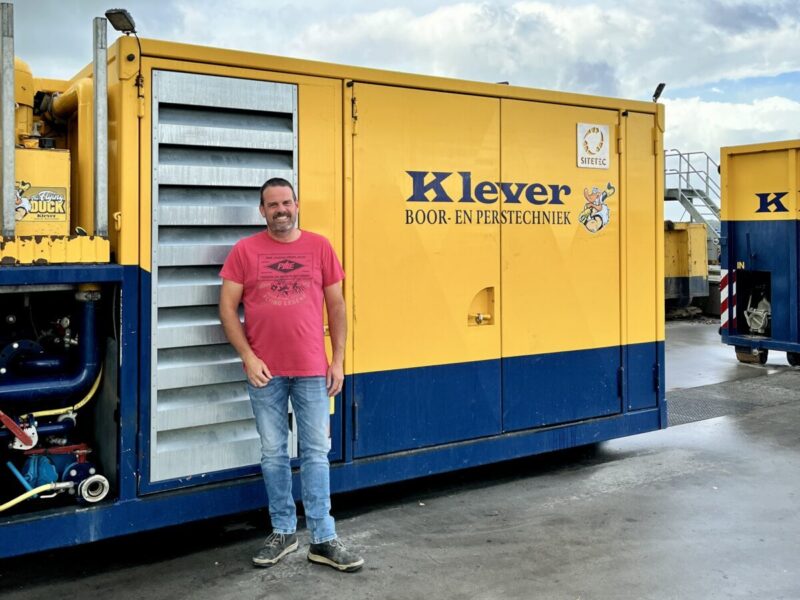
A Dutch drilling company with it’s own style in equipment management – and a debut
What does HDD-equipment management look like when a drilling company develops its own style and dares to say goodbye to the sling? Dominik den Butter shares how safety, pride and innovation come together at Klever Boor- en Perstechniek.

Dry, drier, driest: advanced solids control with the RD1500E
A good recycling unit is key in HDD. The RD1500E was developed with input from Welvreugd and built in close collaboration with Derrick, with a clear focus: effective solids control in sand-heavy soils.
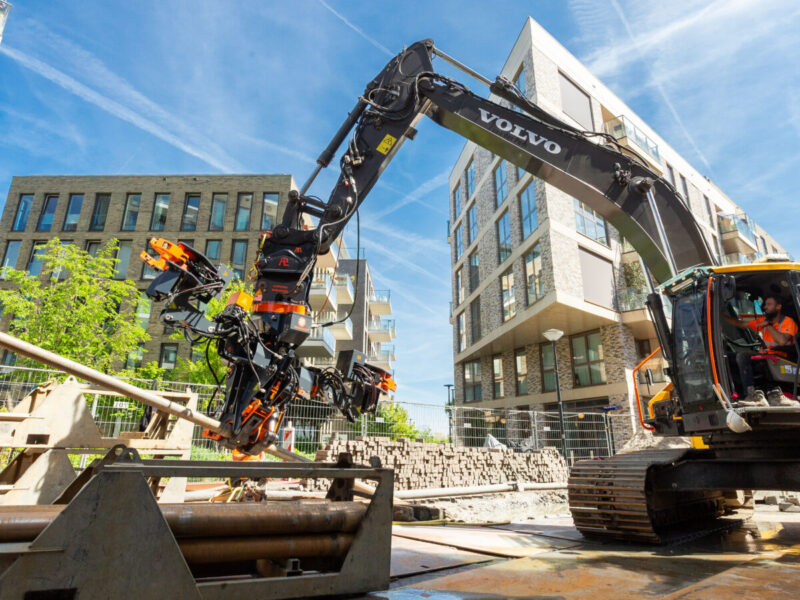
Klever introduces the Tonghand on site – Smarter drilling in the Netherlands
Bart van der Perk mounts the LaValley Tonghand on his excavator and finishes the job two days faster – using forward reaming, right in the middle of a narrow Amsterdam street.

Full-electric HDD in the heart of horticulture
When horticulture pushes for sustainability, infrastructure has to follow. This is how Welvreugd, powered by electric HDD-equipment, is making it happen beneath the greenhouses of the Dutch Westland.

Jobsite visits and training: empowering Bulgarian dealer Actus to provide effective support to their customers
Our dealers speak your language and are familiar with your local working methods and conditions. Equally important, they know how our products are designed, built and maintained. How? By hands-on training and jobsite visits.
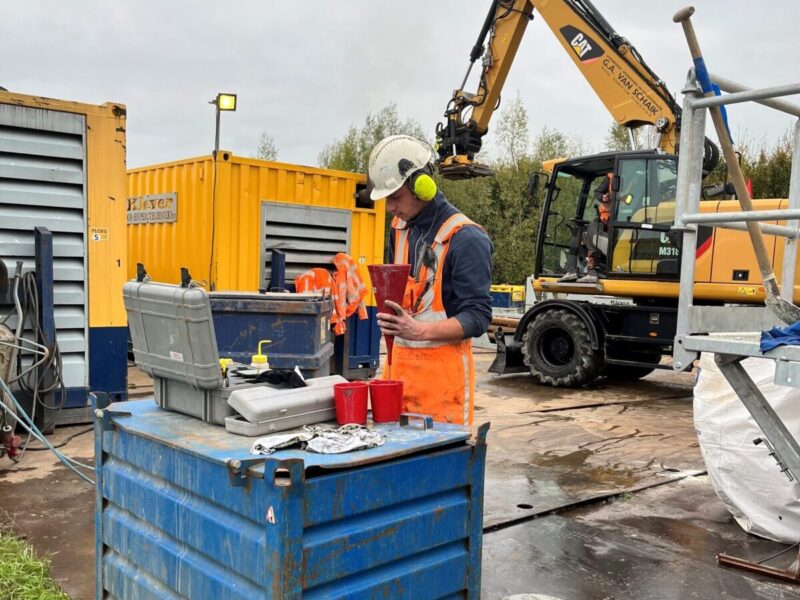
The key to a successful bore is your drilling fluid: 5 tips from mud specialist Marcel Bijleveld
The investment in bentonite for an entire HDD jobsite might be only 2%, but drilling fluid is just as important as the drilling rig itself. A well-designed drilling fluid system not only ensures stable bores but also optimizes the recycling of drilling fluid.
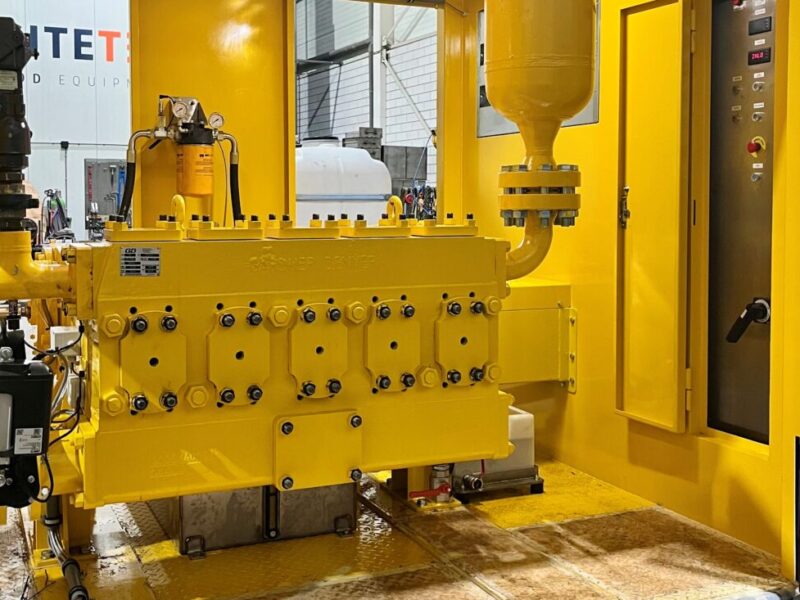
800HP of efficiency: GD Energy Products powering SiteTec’s pumping unit for Klever
As drilling crews start demanding more efficiency every time, maximum horsepower is needed. Read all about our collab with GD Energy Products and Klever.
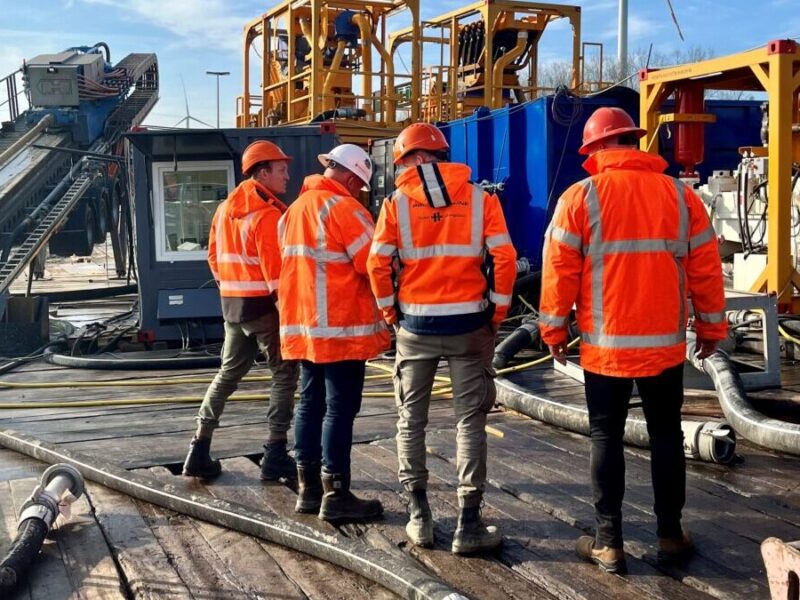
Sharing insights: Jobsite visit in Belgium with Swiss drilling company
This Swiss drilling company prioritises safety and efficiency. Curious about the application of our LaValley Tonghand we took them to two jobsites in Belgium.
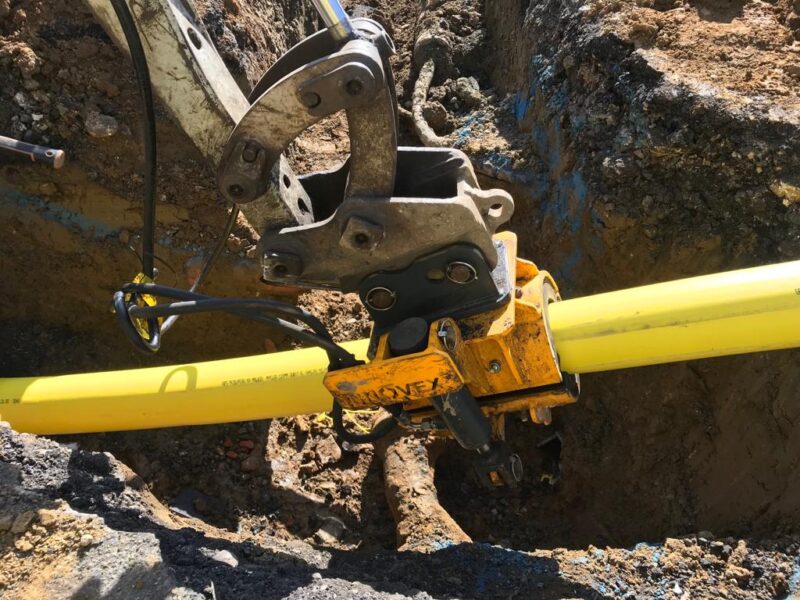
Ready to boost safety and efficiency on your jobsite? Introducing the Innovex Pipe Pusher.
The Innovex Pipe Pusher is a groundbreaking tool that eliminates manual handling entirely. Discover how it’s redefining trenchless projects.

Transformative innovations at SiteTec: everything you should know
An open and inspiring interview with owner and enthusiast Corné Willemsen on how your feedback drives all innovations at SiteTec.
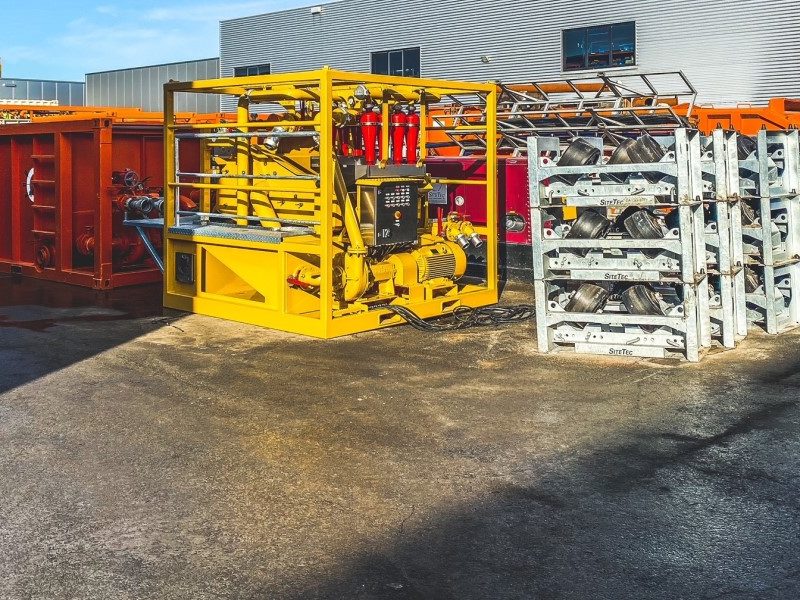
Used units in the picture!
Interested in buying a used drill rig? We put our used units in the picture,…
In touch with our customers, Van Vulpen!
As a machine builder we believe the right way to keep in touch with our…
Proud to present this R1500E recycling unit!
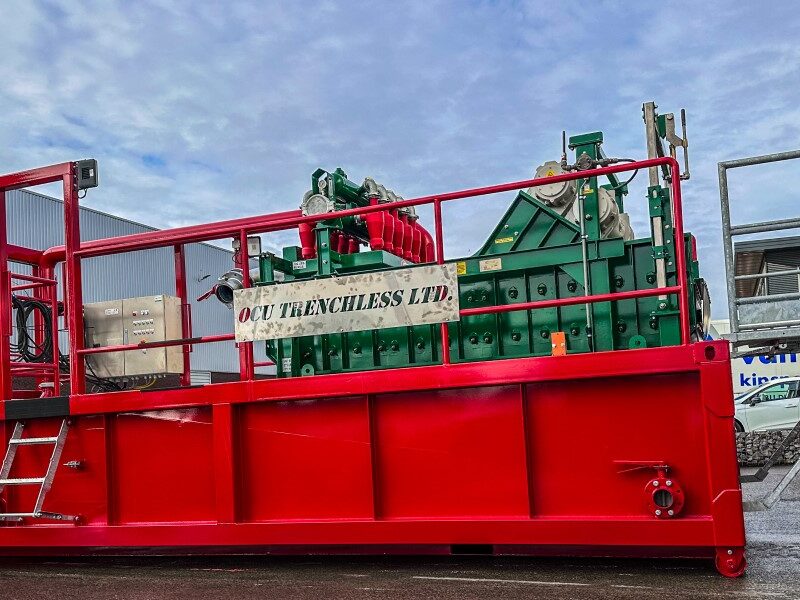
Proud to present this R1500E recycling unit, specially designed for our British customer OCU Trenchless….
In touch with our customers, UK version!
As a Dutch marketing and communication manager working in the HDD Industry I get to…
The safest, most effective material handling tools of today and tomorrow.
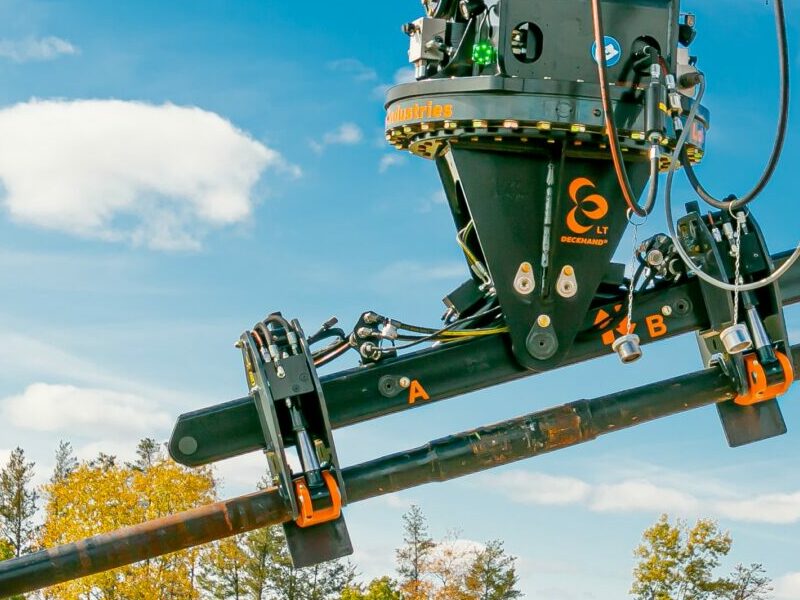
In times where health and safety is more relevant than ever; SiteTec is always looking…