Recycling vs ground: a tough battle near Münster
At the IRO show in Oldenburg, our RD1500E still looked fresh from the paint shop. A few weeks later, we spot it along the roadside just outside Münster, running at full capacity and covered in drilling fluid – exactly how we like to see it. On this jobsite of German contractor Heinz Bente, it comes down to one question: how do you get the drilling fluid clean in ground that hardly cooperates? Sand is scarce. Chalk, on the other hand, is everywhere…
A strong team
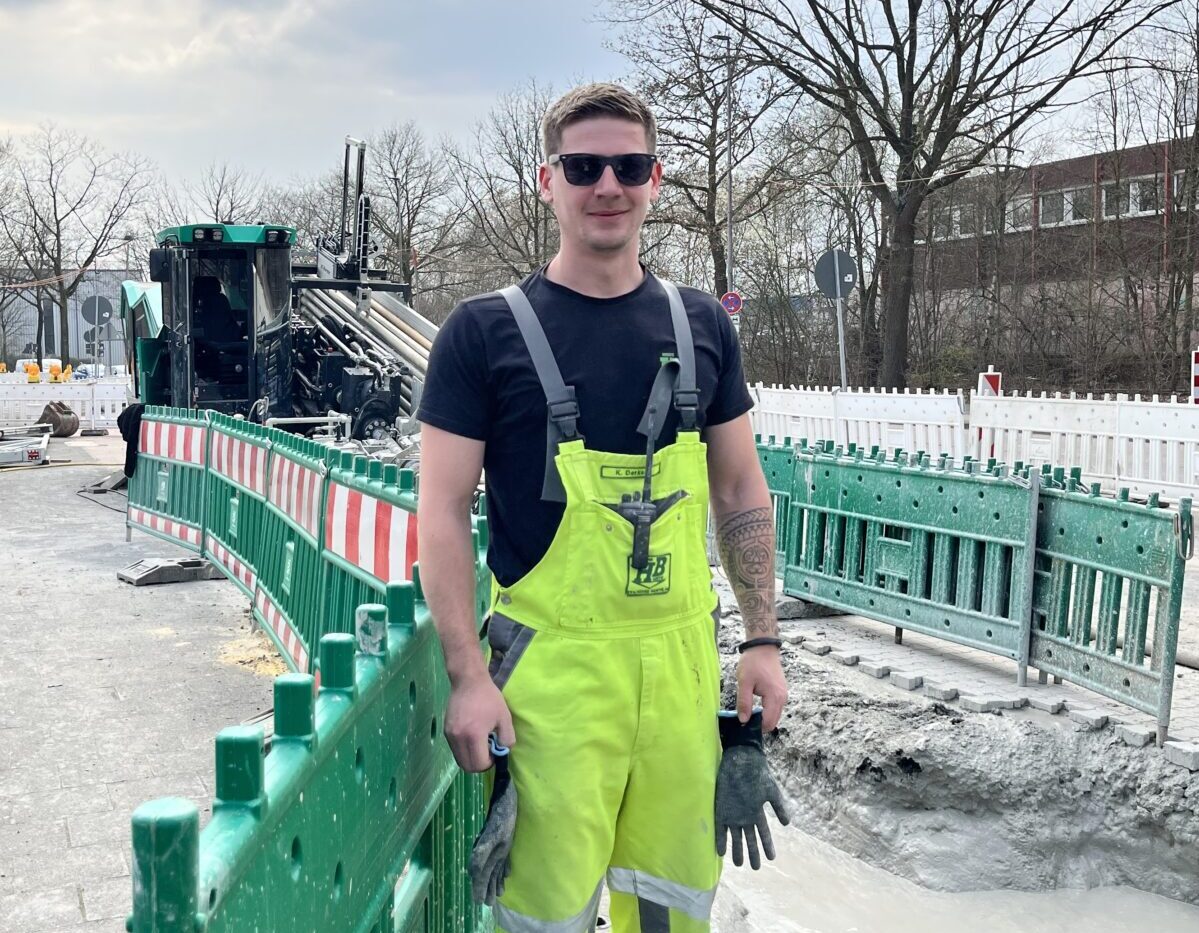
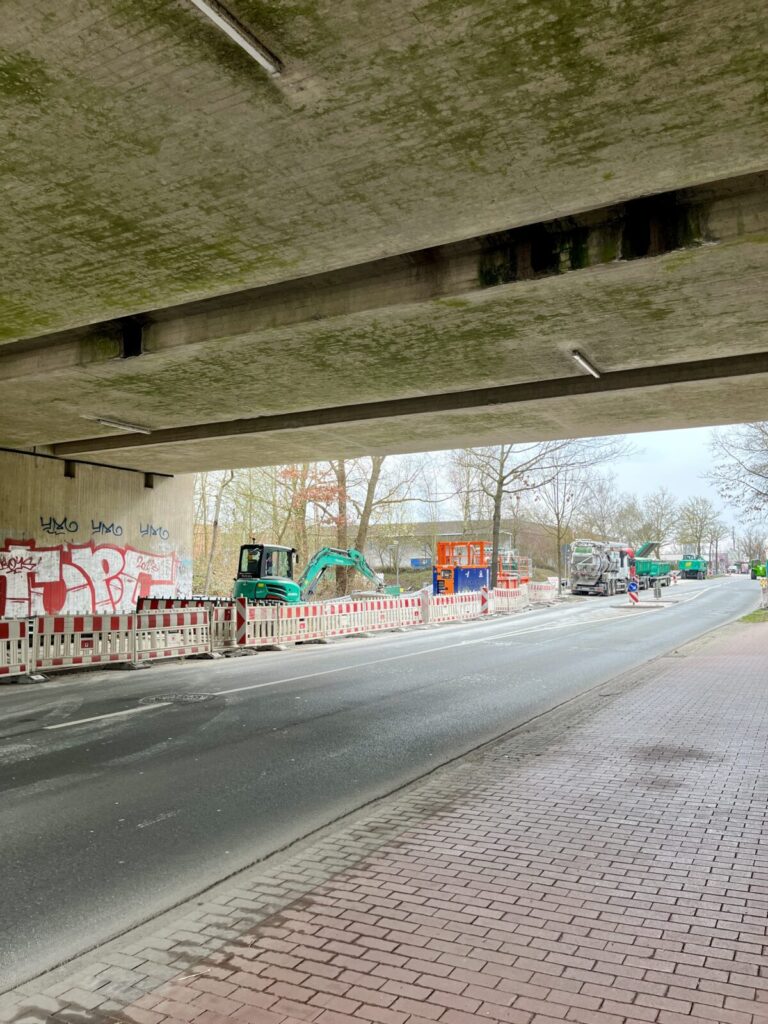
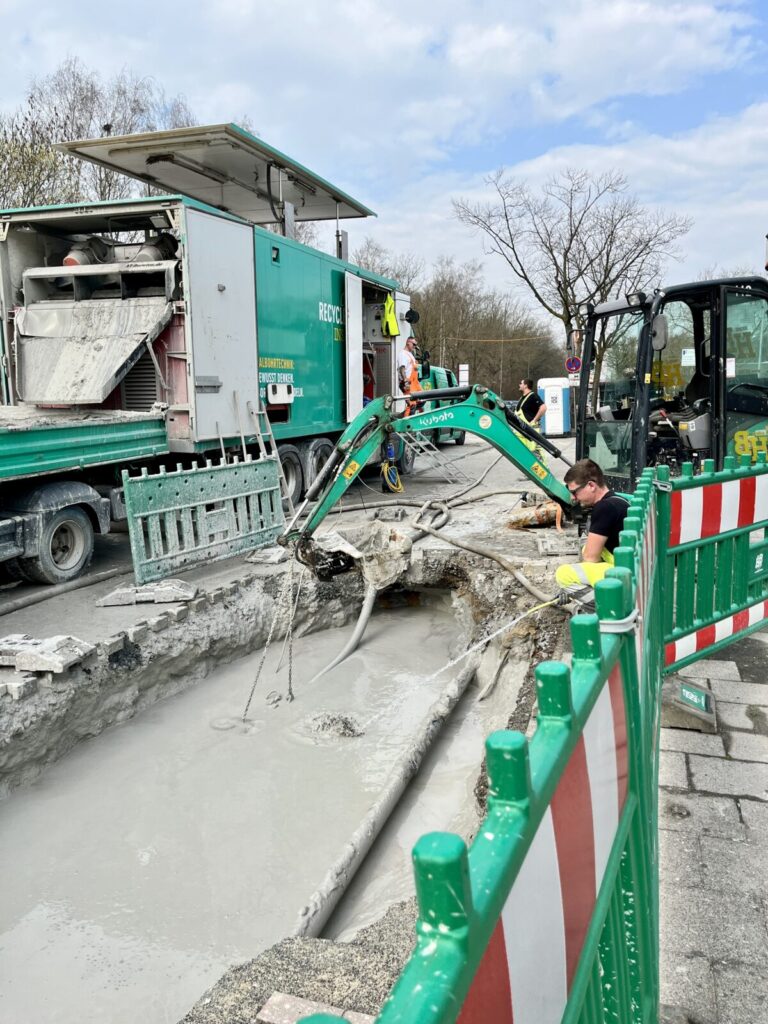
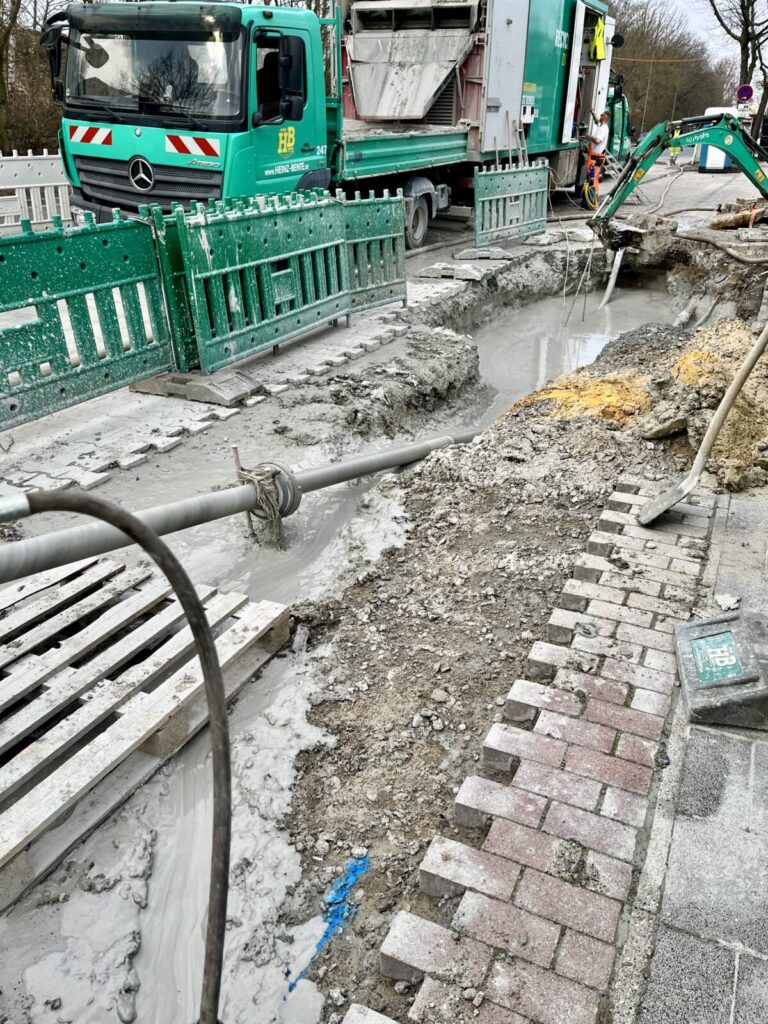
At arrival we immediately notice not one, but two recycling units in operation. One on the rig side, one on the pipe side. On a narrow jobsite like this, that is no coincidence. Foreman Marcel walks over to greet us. He gets straight to the point. “The ground is challenging here. And that’s not the only thing,” he says. During the Second World War, this area was heavily bombed. After the war, soil investigations were carried out, but not all boreholes were properly sealed. That caused disturbances during the pilot bore.”
Marcel shrugs it off. “My job is solving problems. Has been for twelve years now.” It quickly becomes clear that this crew is used to working together. “We always work with fixed specialists. The team may change slightly, but everyone is experienced.”

Heinz Bente: a family business
The work is carried out under the name of Heinz Bente, a German family business with deep roots in the sector. Now in its third generation, the company is led by brothers Michael and Henning Bente. What started as a local contractor has grown into a civil engineering company with around 120 employees, active across Germany, with an increasing focus on underground infrastructure and energy projects.
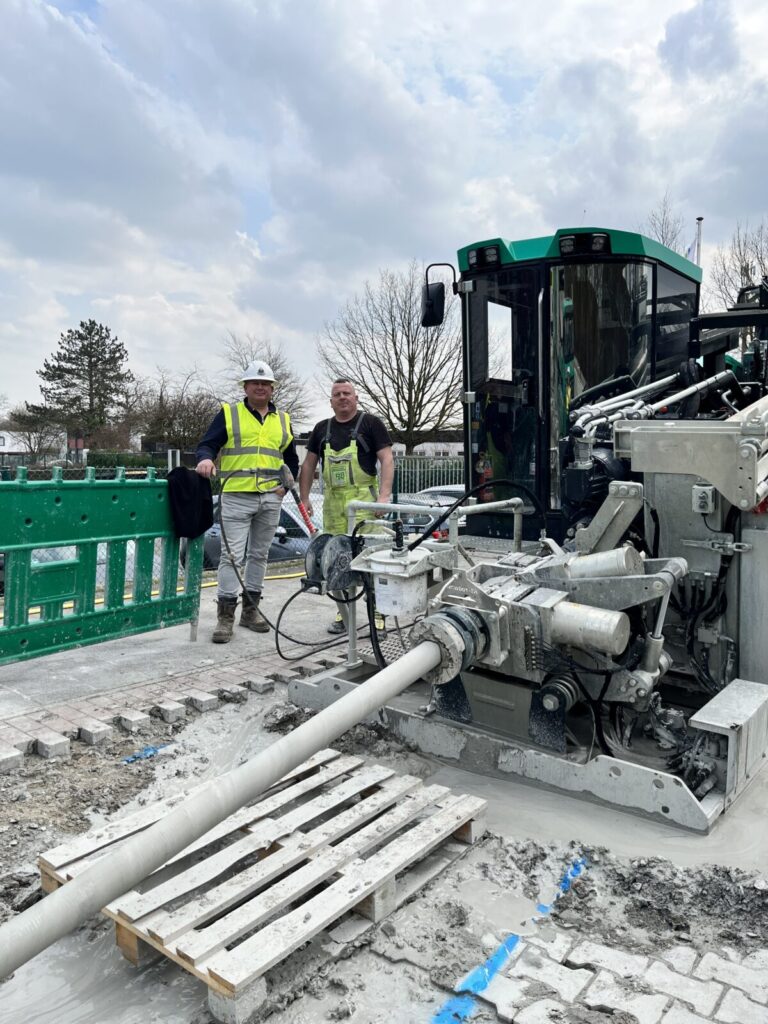
On site, that experience translates into a well-thought-out setup. The bore is carried out with a 50-tonne rig from AT-Boretec, surrounded by supporting equipment from the same builder. As a machine builder ourselves, that stands out. it is impressive how the company develops and builds not just the rig itself, but also the supporting equipment. It creates a closed setup where components connect in a logical way.
But on this jobsite, the ground has its own plans.
When the ground refuses to behave
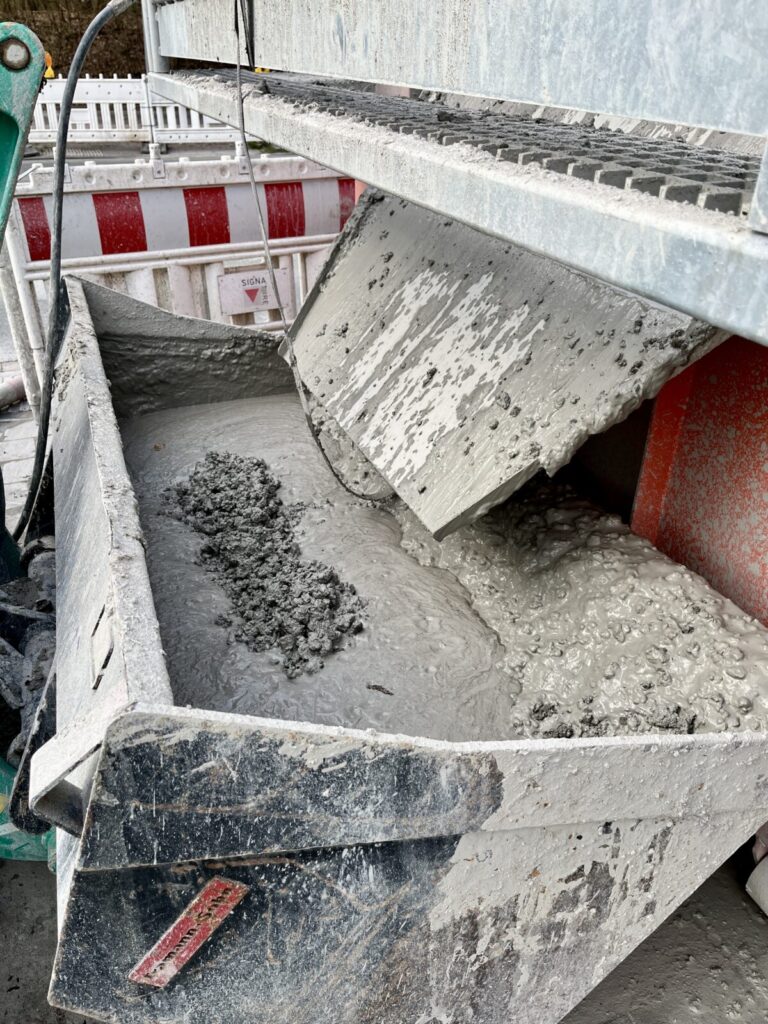
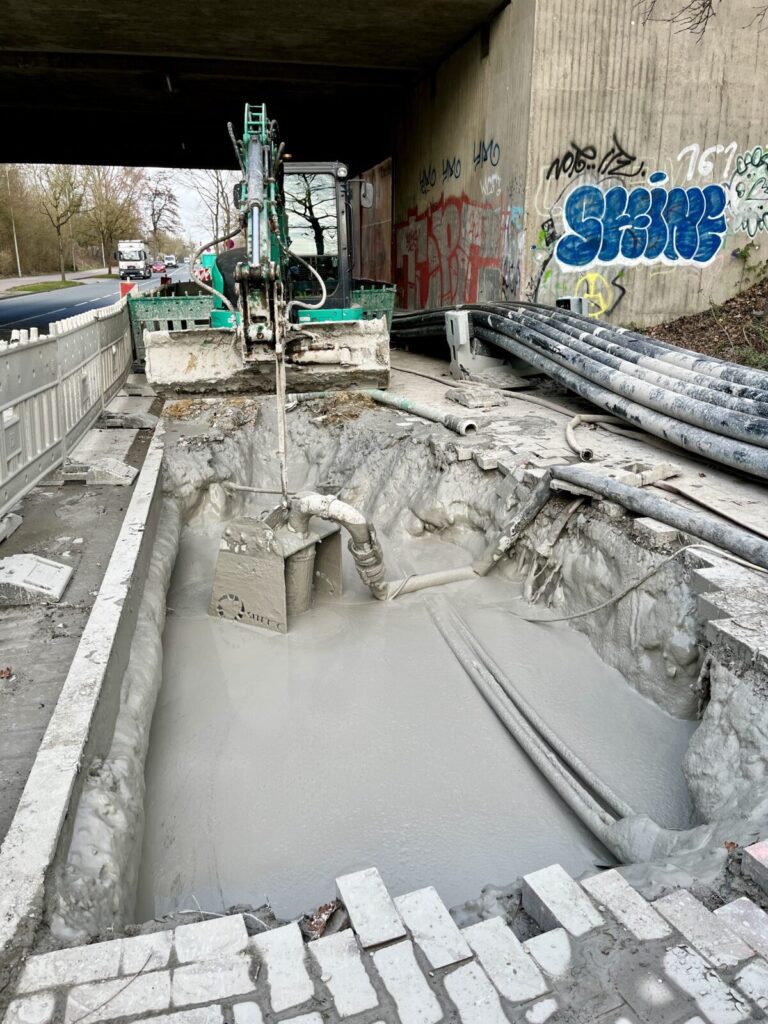
The basics of recycling are clear: shaker screens and hydrocyclones remove coarse material from the drilling fluid. In practice, however, it proves far less straightforward here. “We expected to get more cuttings with a larger reamer, but instead it turns into something like a slurry,” Marcel explains. “Where sand returns as relatively coarse particles that can be separated effectively, chalk breaks down into particles that are simply too fine to separate efficiently.”
Hydrocyclones rely on mass, particle size and centrifugal force. Coarser and heavier particles are pushed outward and separated. With these fine chalk particles, that effect is limited. They remain suspended in the fluid. Despite this complexity, stopping is not an option for the Heinz Bente crew. “The volumes of drilling fluid quickly add up to around 150 cubic metres per day. Over several days, that becomes a significant amount. Disposing of it is simply too costly. And constantly mixing new bentonite would also be a major investment.”
Recycling in stages
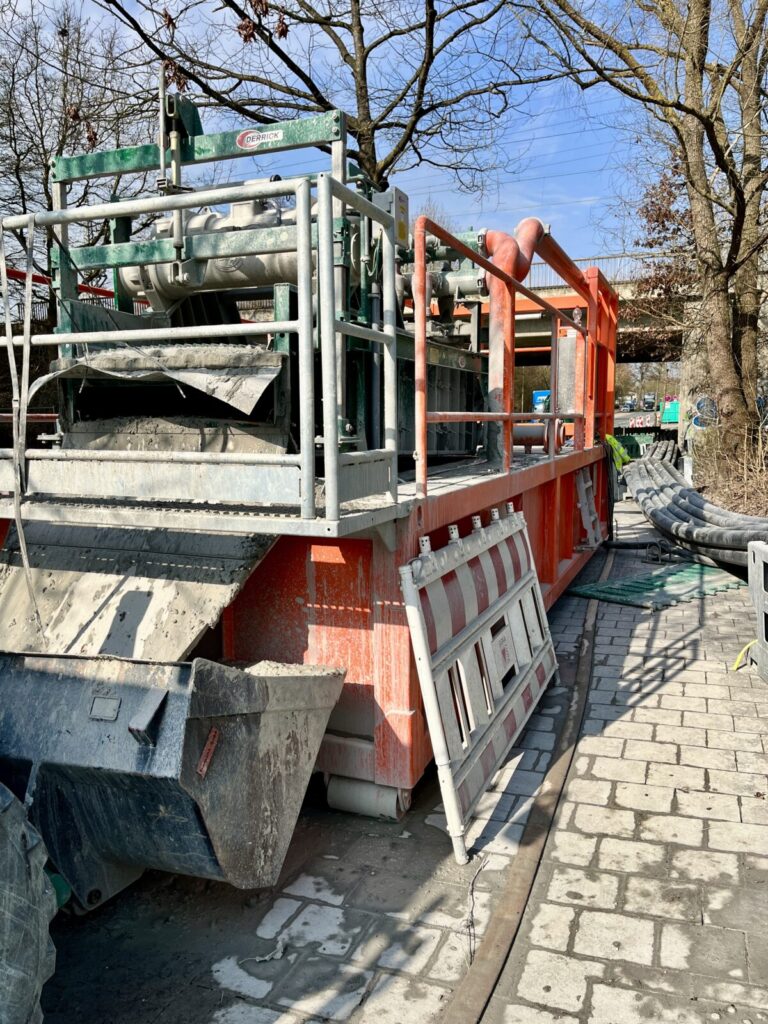
Optimisation on this site comes down to working step by step, extracting what can be separated and keeping the rest under control. The RD1500E takes the first pass, removing most of the coarse material. A truck-mounted AT-Boretec filtration system then further reduces the finer particles.
With recycling taking place on both sides of the bore, more coordination and handling are required, but it keeps the process under control. Kevin shows what comes out of the system. “You can still see small lumps of chalk coming through,” he says. “It’s not perfect, but we make it work.” By removing coarse material at an early stage, the load on the second system is reduced significantly. “The 900-litre circulation pump on our own recycling system can handle it better because of that,” Marcel explains. “Without that step, the system would struggle to keep up”
Despite the conditions not being ideal, Marcel is positive about the performance of the RD1500E. “For the volume, this unit is great. The Derrick system works well and it takes out exactly what we need to keep the process running.” Part of that performance comes from the brand-new four-inch hydrocyclones. Compared to larger cones, these are better suited to handle finer fractions.
Modular thinking, LEGO style
“In an ideal situation, you would have a recycling unit that you can adapt to the ground. A kind of modular system, like LEGO,” Marcel says. At the same time, he recognises the limit of that idea. “The next crew still has to be able to work with it. So you’re always looking for a balance.” As a machine builder, that is a familiar tension. Every jobsite is different, and every specialist has their own preferences. Still, the machine has to remain clear and workable for the next crew as well. In HDD, the complexity is already in the work itself.
Mud engineer Kevin Derksen knows exactly what that means. “I’ve been in HDD for two years now,” he says. “What I like about it is that you always have to think. It’s technical, challenging and evolving quickly. And when things don’t go as planned, you solve it together as a team.”
Moving into the next phase
After nearly four weeks, this bore is approaching its final stage, with the 290-metre line being installed for an electricity connection. At the time of our visit, reaming is carried out with a 900 mm conical reamer, before a clean swap to a barrel reamer for the installation of the casing pipes.
Beyond the technical setup, it’s the way this team deals with what comes their way that really defines the job. Practical, inventive and always moving forward with a clear sense of care for the job. Thanks to Marcel and his team for the warm welcome on site and for openly sharing their approach.
You might like to read...

Tonghand vs stationary breakout unit: looking beyond the obvious
Discover the key differences between a Tonghand and a stationary breakout unit. Learn how flexible pipe handling, improved efficiency and reduced operational costs can transform your drilling workflow.

Supporting HDD in France: partnership with BCM-Ditch Witch
An interview with Laurence Maitre, Managing Director at BCM – Ditch Witch France about the French HDD market, challenges contractors face, and what this new partnership means in practice.

What to do with used drilling fluid? Transpose Recycling’s approach
Used drilling fluid is part of every HDD project. But what happens next?
Transpose Recycling is a new company fully focused on cleaning and reusing drilling fluid within the HDD sector. This article takes a closer look at their approach.

How to keep your HDD equipment in good condition during winter
Winter conditions can damage HDD equipment fast. Discover practical tips to prevent frost damage, protect components and avoid costly downtime.

Why would a vertical well operation use an HDD mixing unit?
This jobsite visit with WellGear shows exactly when HDD equipment becomes the smarter choice. From heavy pills and high-precision mixing to wells with no built-in hopper, the SiteTec M2000E proved its value in a geothermal plug-and-abandonment project.
The rise of HDD in Bulgaria
How do you build reliable HDD capacity in a country where trenchless technology is still in its early stages? This article explores the rise of HDD in Bulgaria through real field experience: from Actus’ role as a dealer, to the challenges of outdated infrastructure, to the teamwork behind a 300-ton rig on the Vertical Gas Corridor.
A Dutch drilling company with it’s own style in equipment management – and a debut
What does HDD-equipment management look like when a drilling company develops its own style and dares to say goodbye to the sling? Dominik den Butter shares how safety, pride and innovation come together at Klever Boor- en Perstechniek.

Dry, drier, driest: advanced solids control with the RD1500E
A good recycling unit is key in HDD. The RD1500E was developed with input from Welvreugd and built in close collaboration with Derrick, with a clear focus: effective solids control in sand-heavy soils.
Klever introduces the Tonghand on site – Smarter drilling in the Netherlands
Bart van der Perk mounts the LaValley Tonghand on his excavator and finishes the job two days faster – using forward reaming, right in the middle of a narrow Amsterdam street.

Full-electric HDD in the heart of horticulture
When horticulture pushes for sustainability, infrastructure has to follow. This is how Welvreugd, powered by electric HDD-equipment, is making it happen beneath the greenhouses of the Dutch Westland.

Jobsite visits and training: empowering Bulgarian dealer Actus to provide effective support to their customers
Our dealers speak your language and are familiar with your local working methods and conditions. Equally important, they know how our products are designed, built and maintained. How? By hands-on training and jobsite visits.
The key to a successful bore is your drilling fluid: 5 tips from mud specialist Marcel Bijleveld
The investment in bentonite for an entire HDD jobsite might be only 2%, but drilling fluid is just as important as the drilling rig itself. A well-designed drilling fluid system not only ensures stable bores but also optimizes the recycling of drilling fluid.
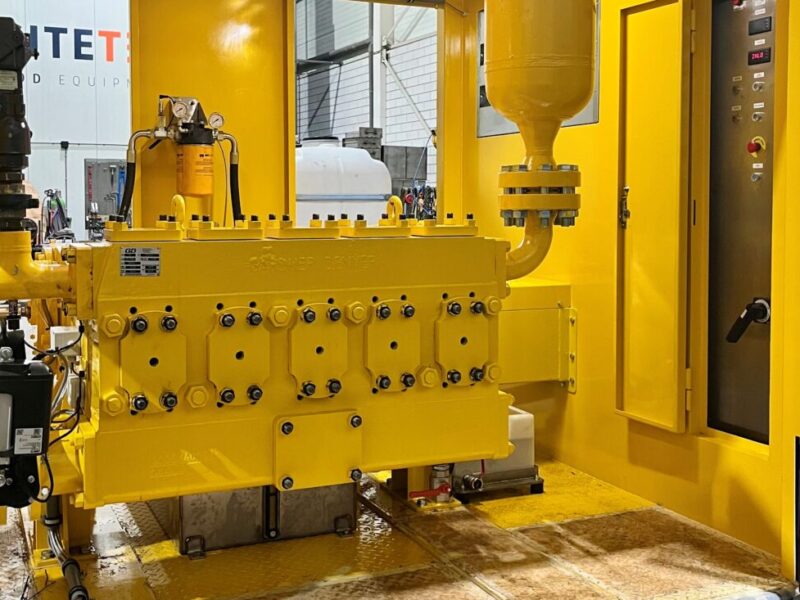
800HP of efficiency: GD Energy Products powering SiteTec’s pumping unit for Klever
As drilling crews start demanding more efficiency every time, maximum horsepower is needed. Read all about our collab with GD Energy Products and Klever.
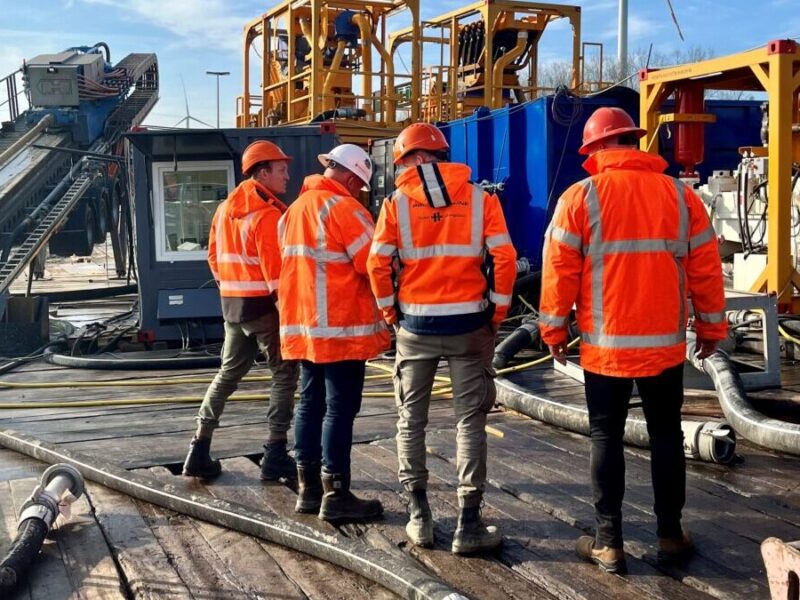
Sharing insights: Jobsite visit in Belgium with Swiss drilling company
This Swiss drilling company prioritises safety and efficiency. Curious about the application of our LaValley Tonghand we took them to two jobsites in Belgium.
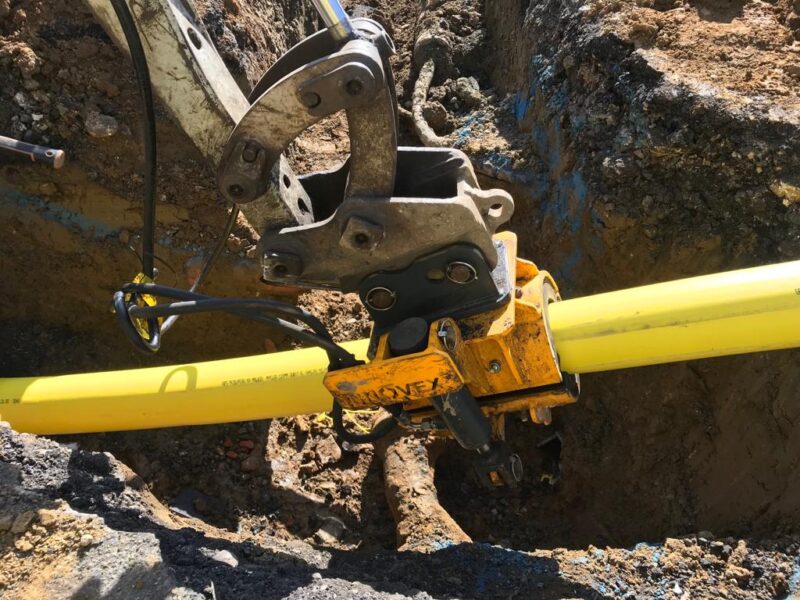
Ready to boost safety and efficiency on your jobsite? Introducing the Innovex Pipe Pusher.
The Innovex Pipe Pusher is a groundbreaking tool that eliminates manual handling entirely. Discover how it’s redefining trenchless projects.

Transformative innovations at SiteTec: everything you should know
An open and inspiring interview with owner and enthusiast Corné Willemsen on how your feedback drives all innovations at SiteTec.
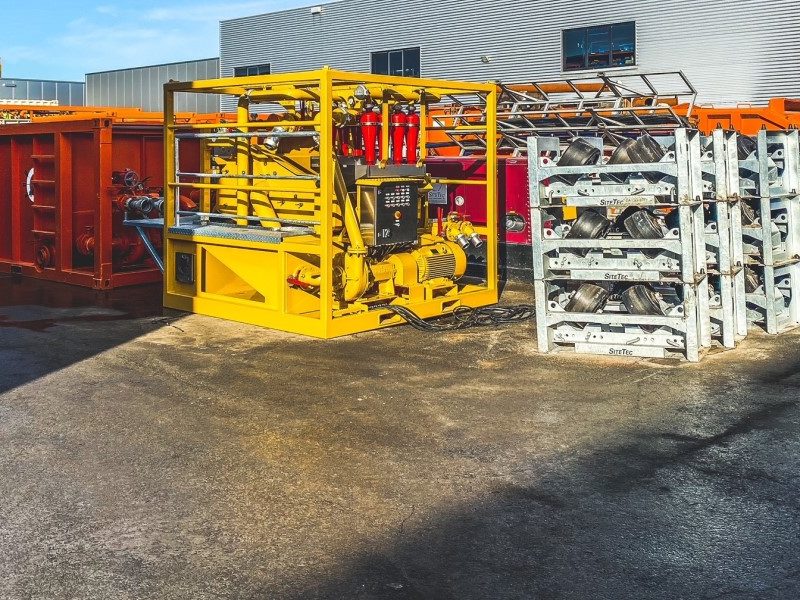
Used units in the picture!
Interested in buying a used drill rig? We put our used units in the picture,…
In touch with our customers, Van Vulpen!
As a machine builder we believe the right way to keep in touch with our…
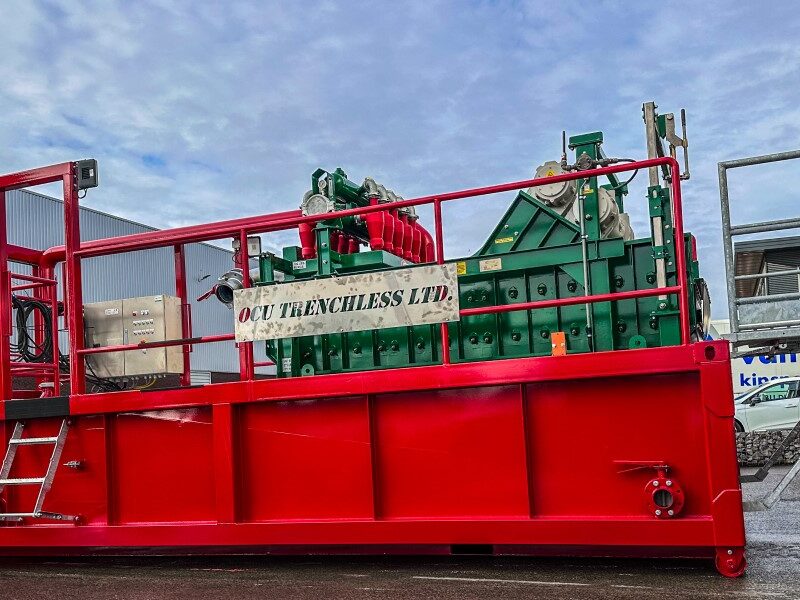
Proud to present this R1500E recycling unit!
Proud to present this R1500E recycling unit, specially designed for our British customer OCU Trenchless….
In touch with our customers, UK version!
As a Dutch marketing and communication manager working in the HDD Industry I get to…
The safest, most effective material handling tools of today and tomorrow.
In times where health and safety is more relevant than ever; SiteTec is always looking…